
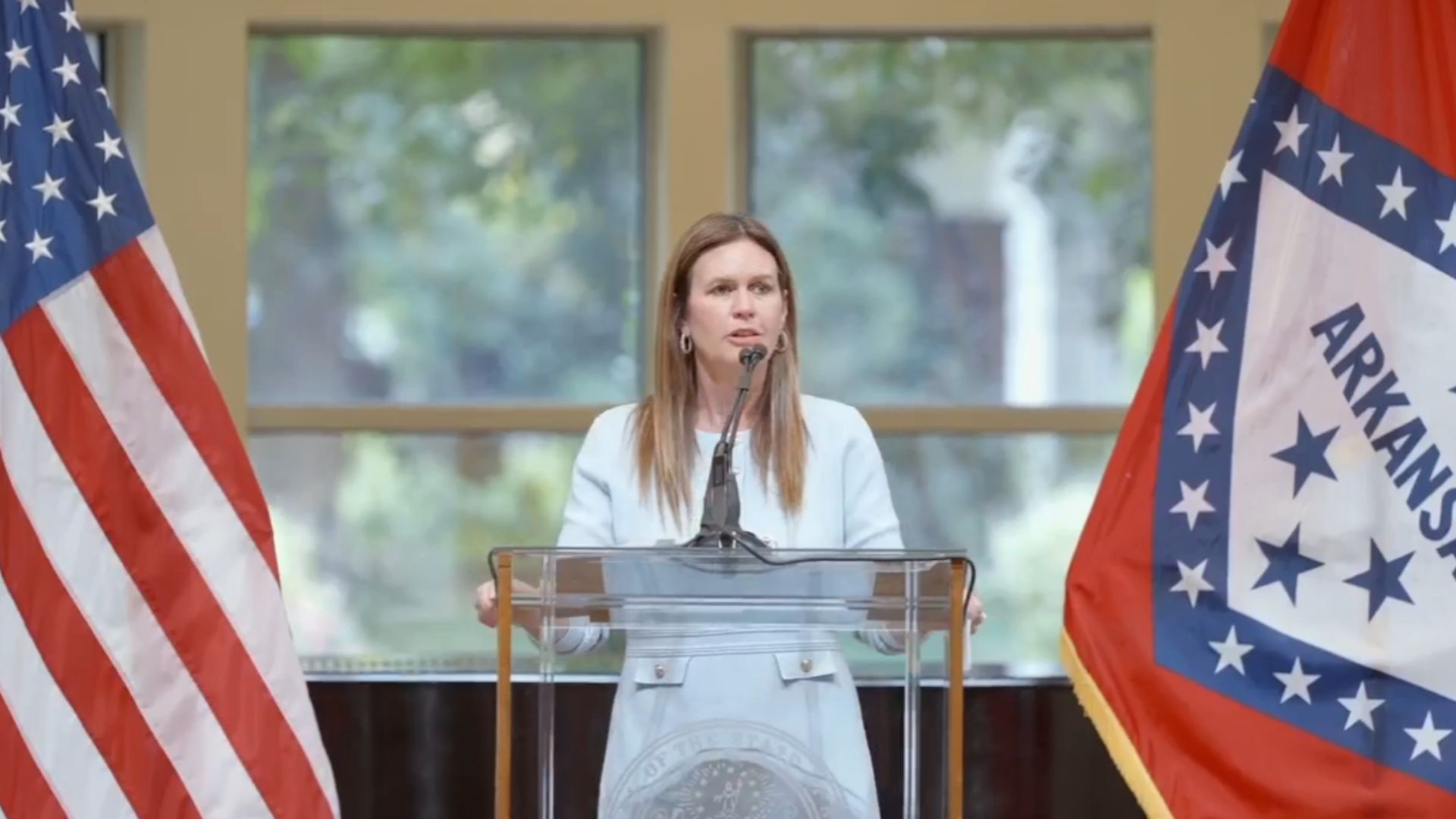
Little Rock, Arkansas – Arkansas state agencies have identified 344 changes aimed at simplifying permits, licenses and other regulatory approvals following a review ordered by Governor Sarah Huckabee Sanders. Of those improvements, 51 have been implemented and another 24 are underway, leaving much of the proposed work still ahead.
The review was required by Executive Order 26-04, which Sanders signed on Feb. 16, 2026. It directed departments to examine how Arkansas handles regulatory approvals and find ways to make the process faster, easier and less expensive for residents and businesses.
Thirteen departments participated. Their findings cover services ranging from sales tax permits and professional licenses to wastewater applications, vehicle registration and eligibility screening for early childhood programs.
“We don’t grow our economy by putting government in charge and telling everyone what to do; we grow our economy by getting government out of the way and letting entrepreneurs and small businesses do what they do best,” said Governor Sanders. “My administration is focused on making government work better for you, and these regulatory changes deliver on that promise: less red tape, faster approvals, and clearer rules. We’re giving Arkansans the tools they need to build the businesses and economy our state needs to thrive.”
Not every proposal can take effect through an immediate administrative decision. Agencies identified 84 findings that require statutory or rule changes from the legislature and another 80 that require changes through departments’ internal rulemaking processes.
Sanders has directed agencies to move forward with changes they can pursue now and work with lawmakers on additional measures during the upcoming legislative session. The announcement therefore includes a mix of completed changes, work already in progress and proposals requiring further action.
Read also: Jonesboro council rejects private club permit for proposed North Church Street restaurant
One planned change would shorten the wait for most new sales tax permits. The Department of Finance and Administration is moving to electronic verification, with the goal of approving most permits within 24 hours instead of approximately 10 business days.
Professional licensing is another focus. Beginning Nov. 12, new insurance agents will take their examination before submitting a license application. According to the announcement, changing that sequence will reduce the average licensing wait from about three weeks to about three days.
The Department of Health has also developed an online Application Portal using state staff. The governor’s office said building the system internally avoided a vendor quote of $5.57 million, along with proposed annual subscription fees of $973,000.
Through the portal, applicants can submit applications, make payments, follow their application status and receive renewal reminders. At least 11 additional programs are expected to join the system, extending its use beyond the programs already participating.
For wastewater systems, an agreement that took effect Aug. 1 changed a process that previously involved both the Department of Health and the Department of Energy and Environment. Applicants had faced two sets of fees and two technical reviews. Under the agreement, they now work with one lead agency and a shared application.
The Department of Energy and Environment has separately changed how it handles incomplete environmental permit applications. Applicants now receive one list of missing items within a set timeframe. The department has also removed additional senior-management review steps for routine coverage under general permits.
Together, those measures address different parts of the approval process. Some change how applications are submitted, while others reduce duplicate reviews or clarify what applicants must provide before their paperwork can move forward.
Other changes are intended to reduce visits to revenue offices. The Department of Finance and Administration is expanding online driver’s license renewal and adding Electronic Vehicle Registration. By the end of the year, car dealers will send vehicle registration information to the state electronically.
Families seeking early childhood services are also included in the review. The Department of Education’s Natural Start screener uses five steps to show whether a family is likely eligible for Arkansas Better Chance, School Readiness Assistance, Head Start or Early Head Start. The tool provides an initial eligibility indication rather than a guarantee of enrollment.
The Department of Health submitted the largest number of proposed changes, with 63. Agriculture followed with 55, while Education identified 42. Human Services accounted for 31, and Energy and Environment identified 30.
Labor and Licensing and Public Safety each proposed 24 changes. Parks, Heritage & Tourism and Finance and Administration each identified 15. Corrections submitted 13, while Commerce and Veterans’ Affairs each proposed 12. The Department of Inspector General identified eight.
The full set of findings spans regulatory, statutory and operational changes. With 75 improvements either completed or underway, the next stages will depend on continued agency action, internal rulemaking and legislative consideration for proposals that require it.


