
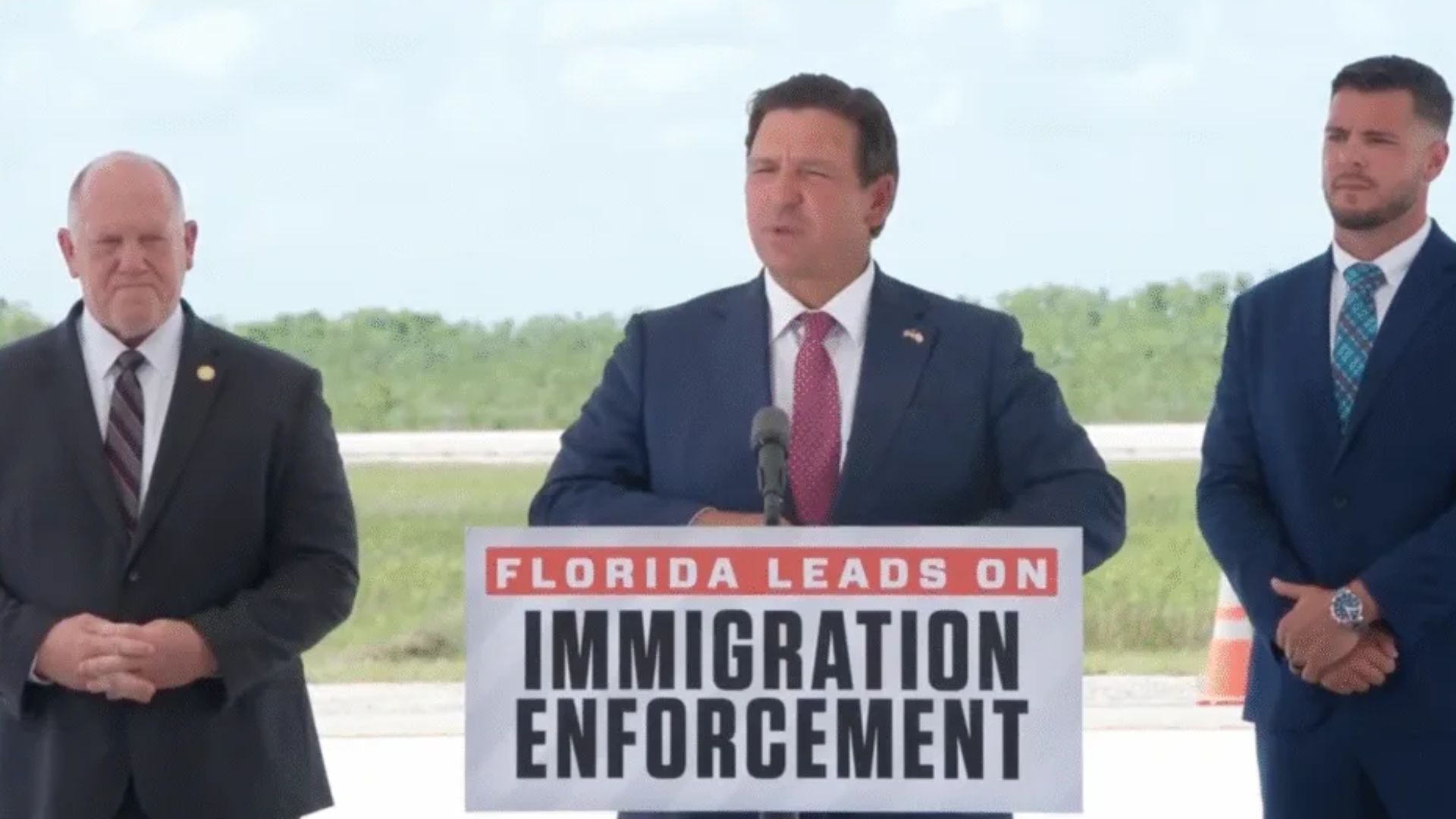
Ochopee, Florida – Florida Governor Ron DeSantis joined White House Border Czar Tom Homan in Ochopee, Florida, on Friday to highlight what state officials are calling the success of “Alligator Alcatraz” and the broader efforts to combat illegal immigration across the state.
The visit centered on Florida’s ongoing role in supporting federal immigration enforcement and expanding detention capacity in coordination with national partners. State officials pointed to what they describe as a significant increase in enforcement activity, including nearly 30,000 additional deportations supported through detention operations. Florida also now accounts for more than 40% of all state and local immigration-related arrests nationwide, according to figures shared during the announcement.
Governor DeSantis emphasized Florida’s position in assisting federal authorities, stating, “Florida led the way in increasing much-needed detention capacity and working with our federal partners to streamline deportations, removing thousands of the most dangerous criminal aliens from our country,” said Governor Ron DeSantis. “Alligator Alcatraz has fulfilled this mission. Detainees who are still awaiting deportation have been transferred to other federal facilities, and demobilization efforts are underway. Along with our partners in the Trump Administration, we will continue the mission to make our communities safer by deporting illegal aliens and ensuring that our nation’s immigration laws are enforced.”
Officials said the facility known as “Alligator Alcatraz” was designed to increase detention capacity during a period of heightened immigration enforcement demands. It was constructed and made operational in an unusually short timeframe, with state leaders noting it became fully functional within eight days. The facility began accepting detainees in July 2025 and was described as the first state-supported federal detention center established specifically to assist federal deportation efforts.
According to state officials, the facility helped relieve pressure on federal detention systems by expanding available space for individuals awaiting processing and removal. This expansion, they said, allowed federal enforcement agencies to allocate more personnel toward field operations and other enforcement priorities.
Florida leaders also highlighted the state’s role in broader immigration enforcement agreements with the U.S. Department of Homeland Security. The state was among the first to enter into arrangements that allow local and state officers to assist in carrying out federal immigration functions.
As a result, Florida currently holds more 287(g) federal enforcement deputizations than any other state in the country. These agreements allow selected local law enforcement agencies to work in partnership with federal immigration authorities, expanding the reach of enforcement operations across the state.
State officials argue that these partnerships and facilities have made Florida a model for other states seeking to cooperate with federal immigration policy. They say the combined efforts have strengthened enforcement capacity while supporting deportation operations targeting individuals deemed high priority under federal guidelines.
The announcement in Ochopee also underscored Florida’s continued alignment with federal immigration priorities under the Trump Administration. Officials said the state remains committed to expanding enforcement cooperation, supporting border security measures, and maintaining detention capacity as needed to support federal operations.
While the “Alligator Alcatraz” facility is now in the process of demobilization, state leaders emphasized that Florida’s broader immigration enforcement strategy remains active. Officials said the state will continue to prioritize cooperation with federal agencies, ongoing use of 287(g) agreements, and support for deportation operations intended to enforce immigration laws.
As the discussion concluded, Florida officials framed the state’s approach as part of a sustained effort to address immigration enforcement challenges and maintain what they described as safer conditions for communities across the state.


