
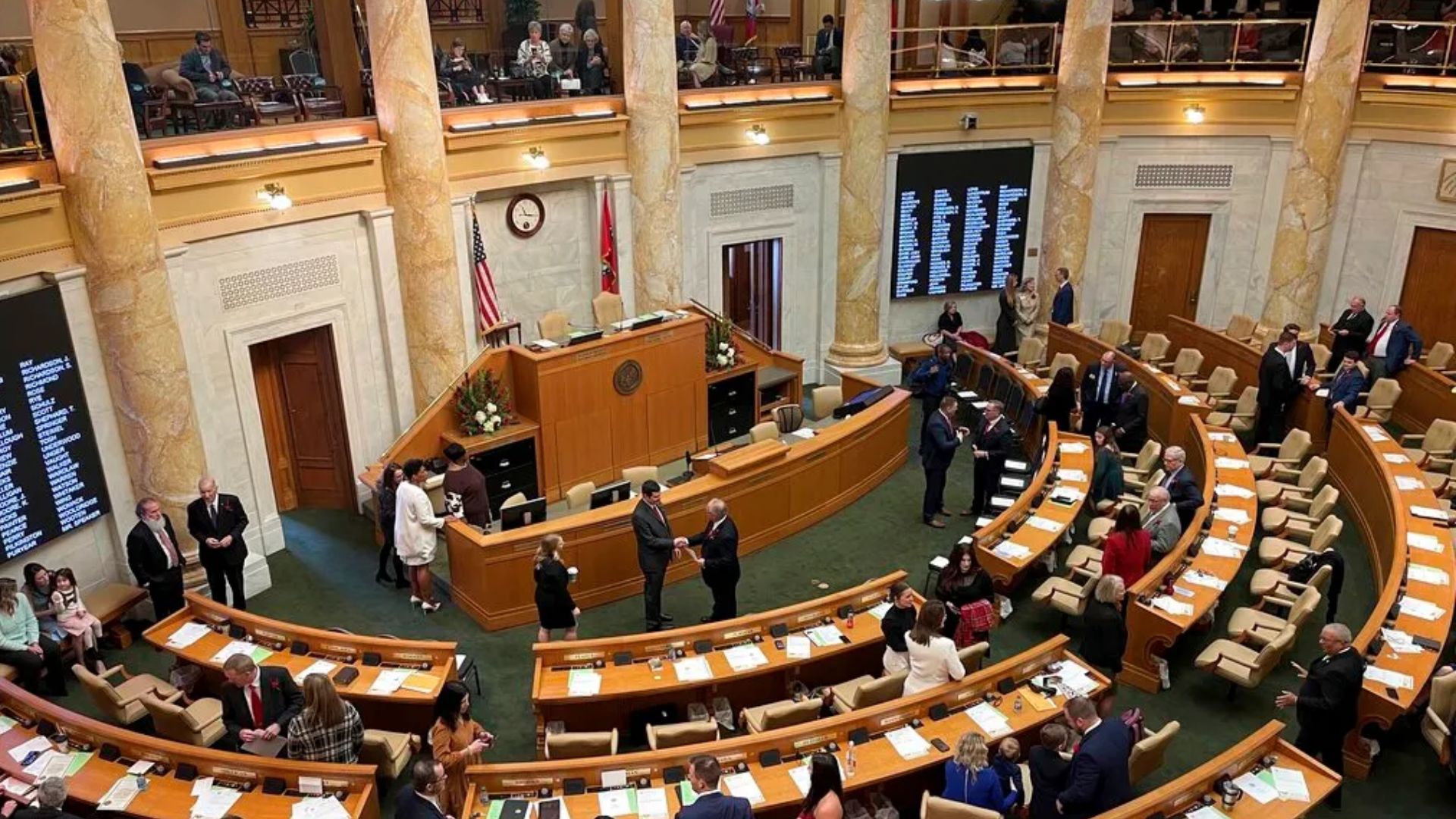
Little Rock, Arkansas – A routine legislative action in Arkansas has sparked attention and debate around one of the state’s most respected youth civic programs, as lawmakers move to block the use of the state Capitol chambers for this year’s Girls State event.
Companion resolutions introduced in both chambers on Thursday—House Resolution 1052 and Senate Resolution 37—were filed shortly after 4 p.m. by the House Management Committee and Sen. Breanne Davis (R-25). The measures would prevent Girls State participants from using the House chambers in May, breaking from a long-standing tradition tied to the program’s activities at the state Capitol.
At the center of the issue is what lawmakers describe as an administrative failure involving registration paperwork. According to the resolutions, several students selected for this year’s Girls State program were not properly submitted by school administrators before the deadline. The documents make clear that the mistake did not lie with the students themselves, but rather with adults responsible for handling the registration process.
The resolutions further state that those responsible have acknowledged the oversight. Lawmakers argue that the failure had real consequences for students who had already been selected to participate in the prestigious civic program, which brings together high school girls from across Arkansas to learn about government, leadership, and public service.
The language of the resolutions is firm, suggesting that the error undermined fairness in participation. It also notes that if the affected students are ultimately allowed to take part in the program, the resolutions would be withdrawn. That condition leaves the situation open-ended, depending on how the registration issue is resolved.
The controversy is further complicated by guidance published on the official Girls State website. An “Important Message” states that deadlines cannot be extended, explaining that doing so would interfere with the complex planning and administrative steps required to run the annual program. That policy has added structure to the program for years, but in this case, it has contributed to tension between strict rules and individual circumstances.
In addition to the resolutions, both the Arkansas House and Senate sent formal letters to the American Legion Auxiliary, the organization responsible for Girls State. The letters refer to an “inadvertent administrative oversight” that led to the late applications being submitted. Notably, the Senate letter carries the signatures of Sen. Davis and 34 other senators, while the House letter is signed by all 99 representatives, signaling unusually broad legislative agreement on the issue.
Despite that unified stance, the situation has prompted concern from some lawmakers who worry about the message being sent to students. Rep. DeAnn Vaught, Chair of the House Management Committee, addressed the issue directly in a public statement explaining the reasoning behind the resolutions.
“Arkansas Girls State embodies the very best of civic engagement, leadership, and public service, and it is a formative experience for young women across our state.
“HR1052 was filed to address concerns and ensure fairness for our students. A number of schools and parents have reached out after young women were denied participation over circumstances beyond their control.
“It would be a profound disappointment to deny these deserving students the opportunity to participate over an honest mistake made by adults, especially when Boys State participants were given extensions to apply.
That is an arbitrary punishment, and its repercussions could echo for decades. We should be opening doors for these young women, not closing them.”
Her remarks highlight the emotional weight surrounding the issue, particularly the impact on students who may miss out on what is widely considered a valuable educational experience. Girls State, like its counterpart Boys State, is often described as a hands-on introduction to government, where participants simulate the structure and function of state government and develop leadership skills.
The resolutions, however, do not directly change eligibility rules for participation. Instead, they focus on access to the Capitol chambers, which serve as a symbolic and functional space for the program’s mock legislative sessions. Denying access to that space would alter a key part of the experience, even if the program itself continues in another form.
Supporters of the resolutions argue that accountability in administrative processes is necessary, especially when deadlines and procedures are clearly outlined. They say consistency is important for maintaining fairness across all participating schools and students.
At the same time, the situation has raised broader questions about flexibility in youth civic programs and how rigid rules intersect with real-world mistakes. The contrast between strict deadline enforcement and the desire to avoid penalizing students for adult errors has become a central theme in the discussion.
For now, the fate of Girls State’s access to the Arkansas Capitol chambers remains uncertain. Much depends on whether the registration issues are resolved and whether lawmakers choose to proceed with or withdraw the resolutions. Until then, attention remains focused on how a procedural oversight has grown into a broader debate about fairness, opportunity, and civic tradition in Arkansas.


