
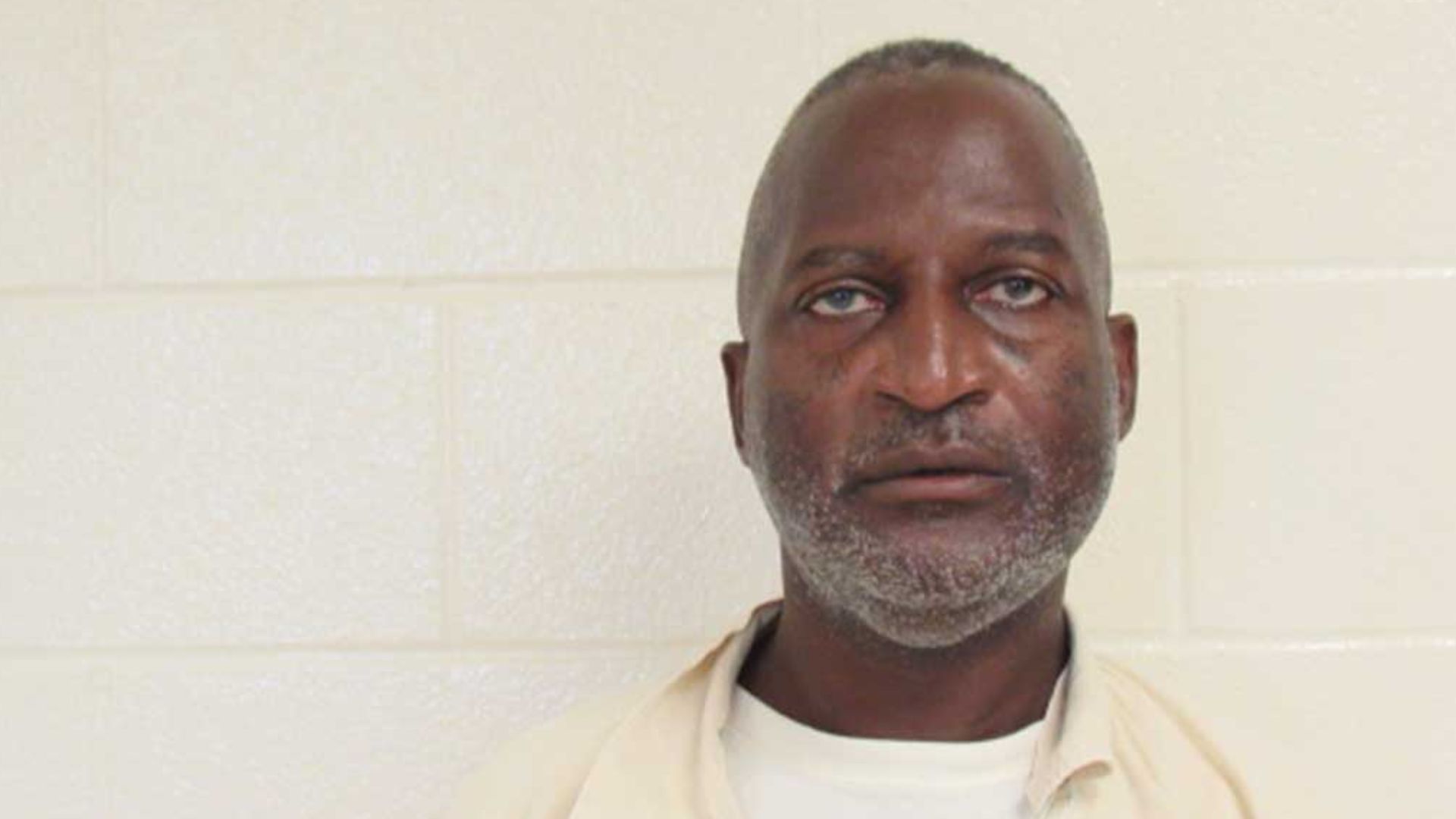
Little Rock, Arkansas – Charlie Vaughn, an Arkansas man who maintained his innocence for more than three decades, is finally set to walk out of prison on Friday after serving 35 years for a crime he did not commit. Vaughn had been incarcerated since 1991 in connection with the murder, rape, and burglary of 81-year-old Myrtle Holmes in 1988—a crime for which DNA evidence had initially excluded him as the perpetrator. Despite this, he was charged with multiple counts in March 1990 and immediately jailed.
Vaughn later pleaded guilty to first-degree murder in an effort to avoid the threat of a death sentence, even though there was no physical evidence tying him to the crime. The decision haunted him for decades, as he maintained his innocence throughout his time in prison. Fast forward to 2015, when another man, Reginald Early, confessed to murdering Holmes, stating that he had acted alone. DNA evidence at the scene confirmed Early’s confession, aligning with his statement that he was the sole person responsible for Holmes’ death.
Even after Early’s admission, Vaughn’s fight for freedom faced setbacks. In 2023, Gov. Sarah Huckabee Sanders denied clemency, prolonging his time in the maximum-security unit at Tucker, Arkansas. However, the State of Arkansas ruled this week that the Arkansas Department of Correction release Vaughn under an Alford Plea Agreement, resulting in a “time served” sentence. Under the terms of this plea, Vaughn will not return to prison following the legal proceedings.
For the first time in over 30 years, Vaughn will have the opportunity to live outside the confines of prison walls. His attorney, Stuart Chanen, said Vaughn is currently staying at a friend’s farm and beginning to navigate life after decades behind bars. “They’re taking Charlie on to their farm and give him a place to live. They’re going to feed him and so Charlie has a lot of advantages that most prisoners coming out of Tucker Max do not have,” Chanen said. This support will give Vaughn a rare opportunity to regain stability and adjust to the world he left as a young man.
The court’s formal ruling was clarified by prosecutor Jeff Rogers, who noted, “The court imposed a sentence of 429 months which constituted a ‘time served’ sentence. These events were fully supported by the primary surviving family member of the victim who was present in court for the proceedings.” Vaughn’s release represents both a personal milestone and a legal acknowledgment of the complex circumstances surrounding his conviction.
Throughout all the challenges, Vaughn maintained hope, according to Chanen. “He really has such a good attitude he’s such a positive person,” Chanen said. That resilience helped him endure decades of confinement while awaiting justice, and it will be critical as he adjusts to life outside prison for the first time in over 30 years.
Friday marks freedom for Vaughn, but as Chanen notes, it does not yet mark full vindication. Plans are underway to revisit clemency in four years, and ongoing lawsuits related to the case remain active. Chanen and his team also plan to explore avenues for financial compensation for Vaughn, whose record still carries the weight of a wrongful conviction.
Vaughn’s story underscores the challenges of the criminal justice system, highlighting how flawed processes can trap innocent individuals for decades. Yet, it also demonstrates the power of persistence, legal advocacy, and the support of those who never stopped believing in his innocence. As he steps into freedom, Vaughn faces the daunting task of rebuilding a life that has been on hold since his early adulthood, carrying both the scars of the past and the hope of a second chance.
This long-awaited release brings closure to a case that has spanned generations, showing that even after decades of injustice, the pursuit of truth and fairness can eventually prevail. For Charlie Vaughn, Friday represents the first step in reclaiming the life that was denied to him for far too long.


