
Little Rock, Arkansas – The debate over U.S. military actions in distant waters has intensified again, this time sparked by a deadly strike on a suspected drug-running vessel in the Eastern Pacific. The operation—one in a growing series of aggressive interdictions—has widened an already tense divide in Washington, where lawmakers clash over legality, presidential authority, and the boundaries of U.S. counter-cartel strategy.
The most recent incident involved a small boat traveling along what officials describe as a well-established drug trafficking corridor. The U.S. Southern Command released video showing the vessel erupting in flames after being struck, killing all four people aboard. Questions about protocol and oversight surfaced immediately, especially because the strike resembled an earlier and far more controversial mission.
That earlier mission, carried out on September 2nd, now sits at the center of a heated national argument. It began like many recent interdictions: a suspected drug boat was spotted, targeted, and hit. Nine people were killed. Two survived—at least at first. According to later reporting, the survivors were killed in a second strike moments after the initial blast. The follow-up hit, now widely referred to on Capitol Hill as a “double tap,” has drawn accusations that the United States violated the law of armed conflict.
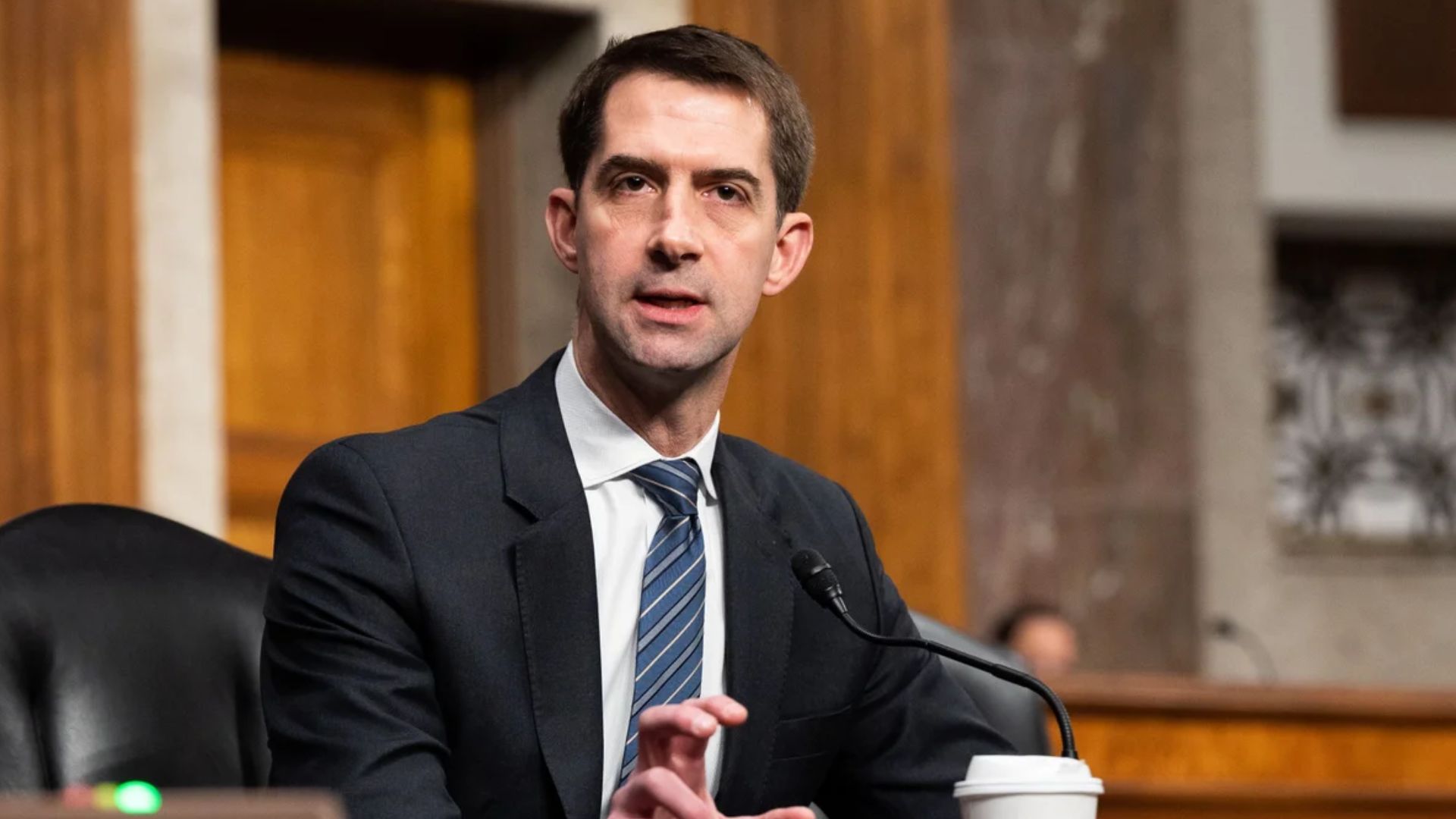
Arkansas Senator Tom Cotton, however, has taken a firm stand against those accusations. Speaking with Channel 7, he delivered a full-throated defense of the mission, insisting that the actions taken by the U.S. military were both lawful and justified.
“I think it’s important that we treat these drug cartels like foreign terrorist designated organizations they are,” Cotton said.
Cotton has long aligned himself with President Donald Trump’s approach to counter-cartel operations, especially in the Southern Caribbean and Eastern Pacific. The strategy relies on identifying vessels traveling along known trafficking routes and striking them before they can ferry narcotics toward American shores. The results are often dramatic—boats left burning, shattered, or sinking as patrol aircraft move on to the next target.
“There’s obviously been a lot in the news about one specific strike on September 2nd,” Cotton said.
That mission, the opening strike of the current campaign, was the moment that set the wider dispute into motion. After the Washington Post reported that the two survivors of the first blast were killed by a second strike, the White House confirmed that Admiral Frank “Mitch” Bradley was the commander who ordered it.
With that confirmation, political disagreements swiftly hardened. Some lawmakers argued that the double tap violated rules protecting enemy personnel who are no longer capable of fighting. Others said the U.S. was well within its rights to finish the mission, especially if evidence suggested the survivors were still engaged in trafficking activity.
Cotton falls firmly in the latter category.
“What is clear, they were not incapacitated, they were not distressed and the second strike in absolutely no uncertain terms did not constitute a war crime,” he said.
Cotton, along with a select group of members of Congress, watched the classified video of the second strike during a closed-door briefing. He later said the footage showed the two survivors attempting to right their overturned vessel in what he described as an effort to continue moving drugs toward the United States. Some lawmakers who attended similar briefings dispute that interpretation, arguing that the survivors may have been in distress.
Still, Cotton maintains that the U.S. military acted appropriately and in alignment with standing rules.
“They may have been signaling to their drug trafficking partners to come rescue them. Admiral Bradley made the right decision under the circumstances,” he said.
The rules of engagement explicitly prohibit attacking enemy personnel who are shipwrecked and unable to fight. Cotton insists that this circumstance does not apply, describing the survivors not as helpless but as active participants trying to salvage their mission.
The issue becomes more tangled when questions of authority arise. Congress has not provided authorization for the use of military force specifically for these strikes, which has stirred additional concerns. Lawmakers from both parties want to know who authorized the operations, what intelligence was used, and whether there are checks in place to determine when lethal action is justified.
Cotton argued that Congress has been properly informed and updated throughout the process.
“We’ve had multiple briefings going back to the beginning of September on the Intelligence Committee which I chair and the Armed Services Committee of which I’m a senior member,” Cotton said. “The allegation the Washington Post last week did not ring true to me but anytime such a serious allegation surfaces I think it’s our responsibility as leaders to look into the facts. Not to take it as gospel, not to dismiss it out of hand. That’s what we’ve done now and again I think we can put to rest the notion that there’s any kind of war crime committed by anyone in our military.”
Despite the rising calls for transparency, the video of the second strike remains classified. Cotton said he supports releasing it to the public, a move that would almost certainly sharpen the national debate.
President Donald Trump and Secretary of Defense Pete Hegseth have also defended the follow-up attack, reinforcing Cotton’s position and signaling that the administration stands firmly behind the military officers who carried out the mission.
For now, the controversy continues to evolve amid competing narratives—one arguing that the United States crossed a legal line, another insisting that the country is operating responsibly against violent criminal organizations that have long evaded traditional law enforcement. With more interdictions likely ahead, and with Congress still demanding answers, the debate over what truly happened on the waves of the Eastern Pacific is far from over.


