
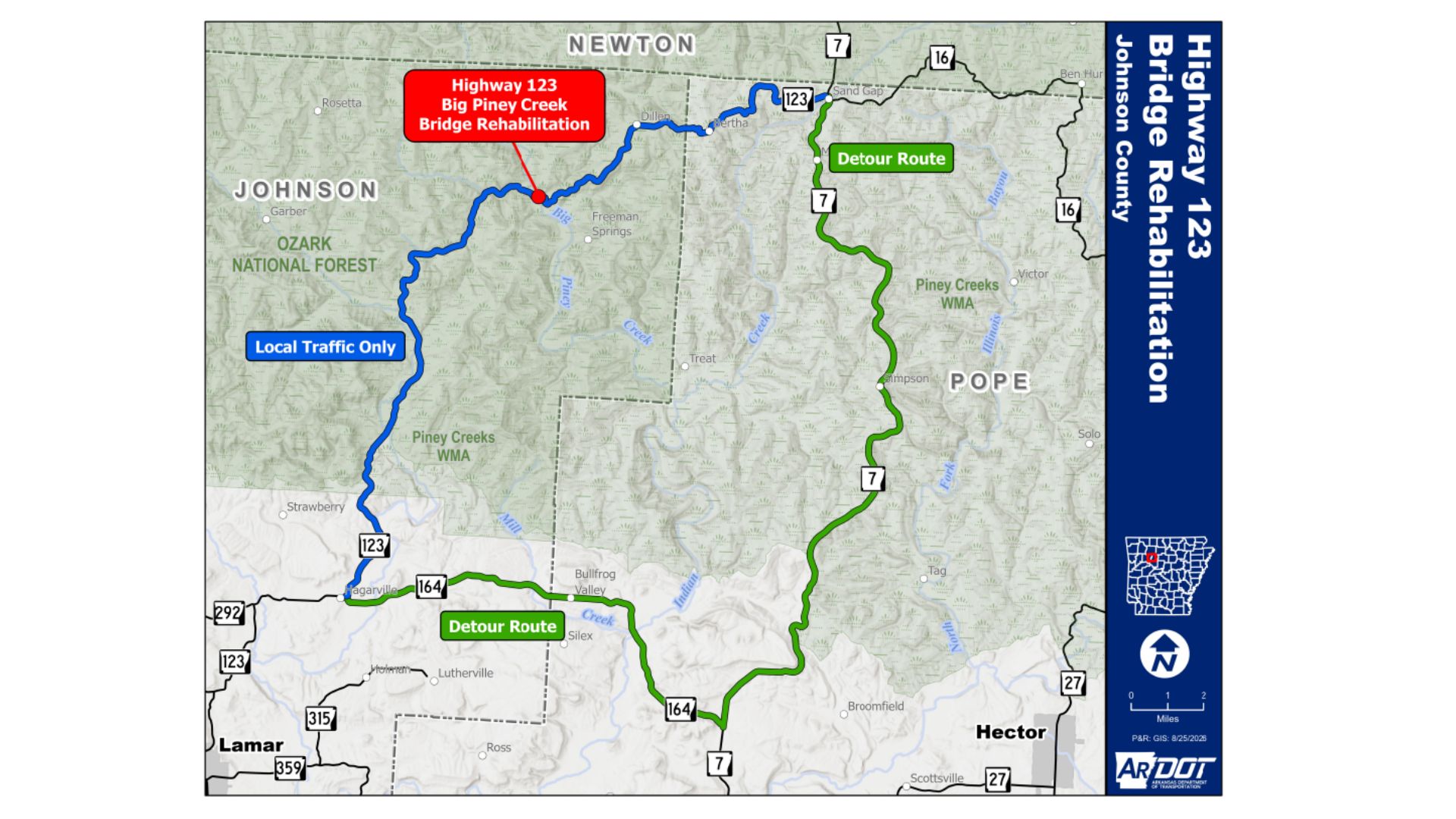
Little Rock, Arkansas – A historic bridge in Johnson County is scheduled to close for several months as crews carry out rehabilitation work on the structure, according to the Arkansas Department of Transportation.
The Historic Big Piney Creek Bridge on Highway 123 is expected to close around the clock beginning at 7 a.m. Monday, August 31. The closure is scheduled to remain in place until 6 p.m. Thursday, December 3, weather permitting.
The extended closure will allow construction crews to complete planned work on the bridge without regular traffic moving through the work area. During the project, Highway 123 will remain accessible to local traffic on both sides of the closure, but motorists will not be able to travel through the bridge itself.
Drivers who need to continue their journey beyond the closed section will have to use a signed detour. The alternate routes are designed to connect traffic with Highway 123 on the opposite side of the bridge while avoiding the construction zone.
Motorists traveling toward the north side of the closure will be directed to take Highway 123 south to Highway 164. From there, drivers will travel east on Highway 164 until reaching Highway 7, then head north on Highway 7 before returning to Highway 123.
Traffic heading toward the south side will follow the route in the opposite direction. Drivers will take Highway 123 north to Highway 7, then travel south on Highway 7 to Highway 164. They will then take Highway 164 west until reconnecting with Highway 123.
The detour adds travel distance compared with the normal route, so drivers who regularly use Highway 123 in the area are being advised to plan ahead. Those making trips during the closure should allow additional time for the alternate route, particularly when traveling to destinations on the other side of the bridge.
The closure is expected to remain in effect throughout the rehabilitation period rather than being limited to daytime construction hours. That means motorists should expect the bridge to be unavailable both during the day and overnight from the start of the project through the scheduled completion date.
Construction warnings will be placed throughout the area to help drivers understand the changing traffic pattern. Digital message boards, construction barrels, barricades and other signs will be used to alert motorists to the closure and direct them toward the appropriate detour.
Local traffic will continue to have access to Highway 123 on either side of the bridge. However, drivers should pay close attention to signs and barricades when approaching the construction area and avoid attempting to travel through the closed section.
The project schedule is dependent on weather conditions. If weather or other construction issues affect the work, the timing of the closure or completion could change.
The Historic Big Piney Creek Bridge is an important part of the Highway 123 route through Johnson County, making the rehabilitation project a significant temporary change for people who use the road. The planned work will require motorists to adjust their normal travel patterns for several months.
Officials are encouraging drivers to watch for the posted information and use the signed detour rather than entering the closed area. Digital message boards will provide additional warnings as motorists approach the affected section.
The closure is currently scheduled to begin Monday morning, August 31, at 7 a.m., and continue until Thursday afternoon, December 3, at 6 p.m. Once the rehabilitation work is completed, normal traffic through the bridge is expected to resume.
Motorists looking for additional information about the project can visit the project’s website. Drivers should also check posted signs and message boards for updates while the work is underway.
For anyone who depends on Highway 123 for regular travel through Johnson County, the best approach will be to prepare for the months-long closure before it begins. The signed routes through Highways 164 and 7 will provide access around the bridge, while local traffic will continue to reach destinations on either side of the work zone.


