
Jonesboro, Arkansas – As more children spend time online for school, gaming, and social media, the city of Jonesboro is asking parents to take a more active role in guiding how that time is used. The message comes during Internet Safety Month, a period focused on raising awareness about digital risks and encouraging safer habits at home.
City officials say the internet can be a useful tool for learning and connection, but it also brings real dangers if children are not protected. From online strangers to data exposure, the risks can appear in many forms, often in spaces where kids feel comfortable and unguarded.
To help families respond, Jonesboro is pointing parents toward guidance from the U.S. Department of Homeland Security’s Know2Protect campaign. The program outlines practical steps that adults can take to reduce risks and build safer online routines for children and teens.
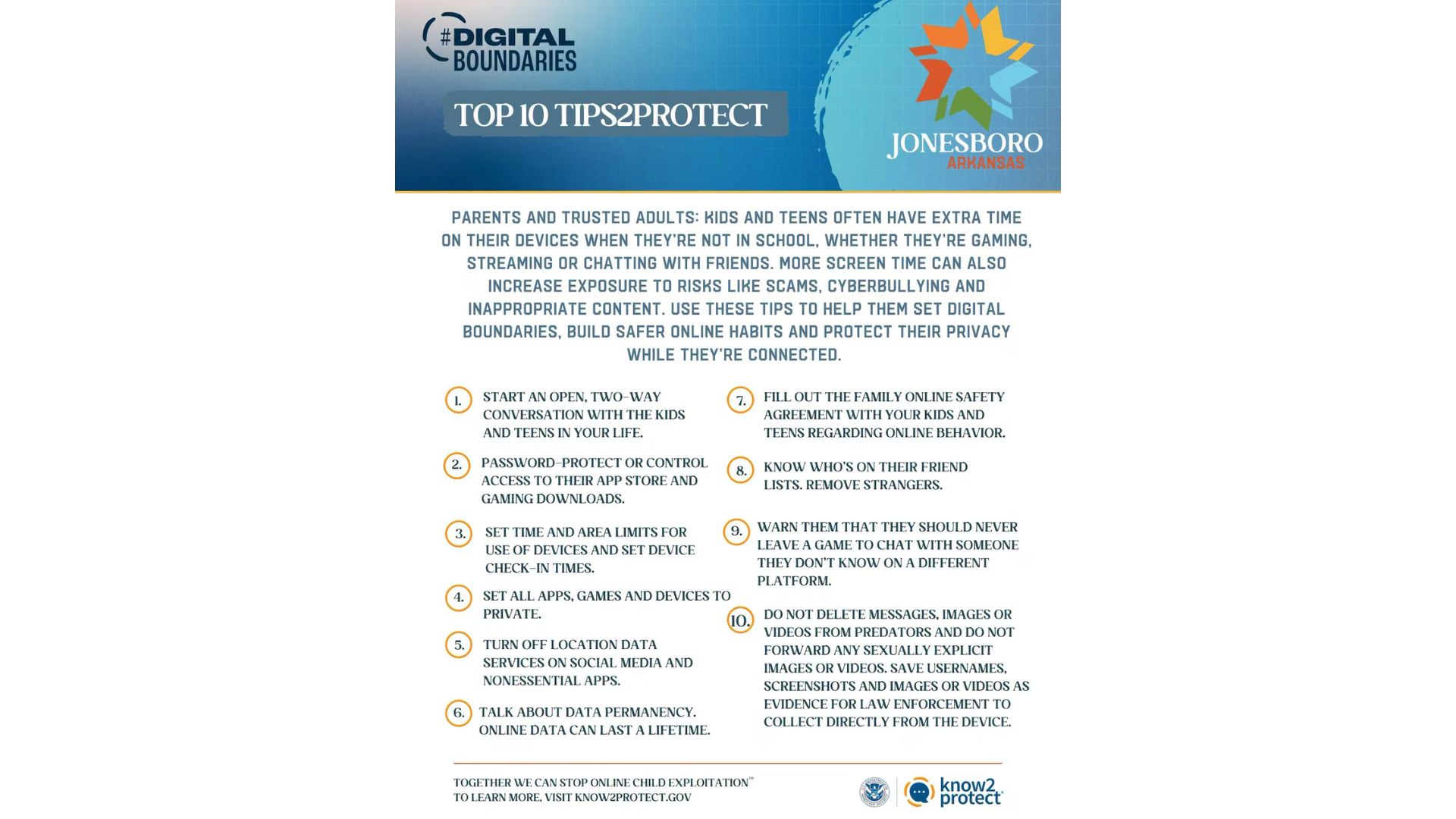
The campaign offers “10 Tips2Protect for parents and trusted adults to follow to keep children safe:” The recommendations focus on everyday actions that can shape how young people interact with technology and who they interact with online.
Among the suggestions are simple but consistent habits, such as communication and supervision. Parents are encouraged to “Start an open, two-way conversation with the children and teens in your life.” Officials say that ongoing dialogue can help children feel more comfortable reporting uncomfortable or suspicious online behavior.
Digital control tools are also highlighted. Families are advised to “Password-protect or control access to their app store and gaming downloads.” This step is intended to reduce the chance of children installing unsafe or unapproved applications without supervision.
Time management is another focus. The guidance suggests parents “Set time and area limits for device use and establish device check-in times.” According to safety experts, structured limits can help balance online activity with offline routines like schoolwork, sleep, and family time.
Privacy settings play a major role as well. The campaign recommends to “Set all apps, games, and devices to private.” In addition, it urges parents to “Turn off location data services on social media and nonessential apps.” These measures are meant to reduce exposure to unknown users and prevent unnecessary sharing of personal information.
The Know2Protect guidance also stresses awareness of long-term digital footprints. Parents are advised to “Talk about data permanency. Online data can last a lifetime.” Officials say many young users do not fully understand that once something is posted online, it can be difficult or impossible to remove completely.
Family involvement is also encouraged through structured agreements. The campaign suggests parents “Fill out the Family Online Safety Agreement with your kids and teens regarding online behavior.” This approach is intended to set shared expectations and create clearer boundaries.
Another recommendation focuses on social connections. Parents are urged to “Know who’s on their friend lists. Remove strangers.” Officials warn that unknown contacts can sometimes pose risks, especially in gaming and social platforms where identities are not always verified.
The guidance also includes caution about moving conversations off platforms. Children are told to “Warn them that they should never leave a game to chat with someone they don’t know on a different platform.” Experts say this is often a tactic used to avoid platform monitoring systems.
Finally, the campaign highlights the importance of preserving evidence in cases of exploitation. It states, “Do not delete messages, images, or videos from predators, and do not forward any sexually explicit images or videos. Save usernames, screenshots, and any images or videos as evidence for law enforcement to collect directly from the device.”
Jonesboro officials say these steps are not meant to create fear, but to build awareness and safer habits over time. They emphasize that small actions at home can make a significant difference in protecting children online.
As the city continues its awareness push, the message remains simple and direct. “A few minutes of conversation today can help protect your child tomorrow,” the city said.


