
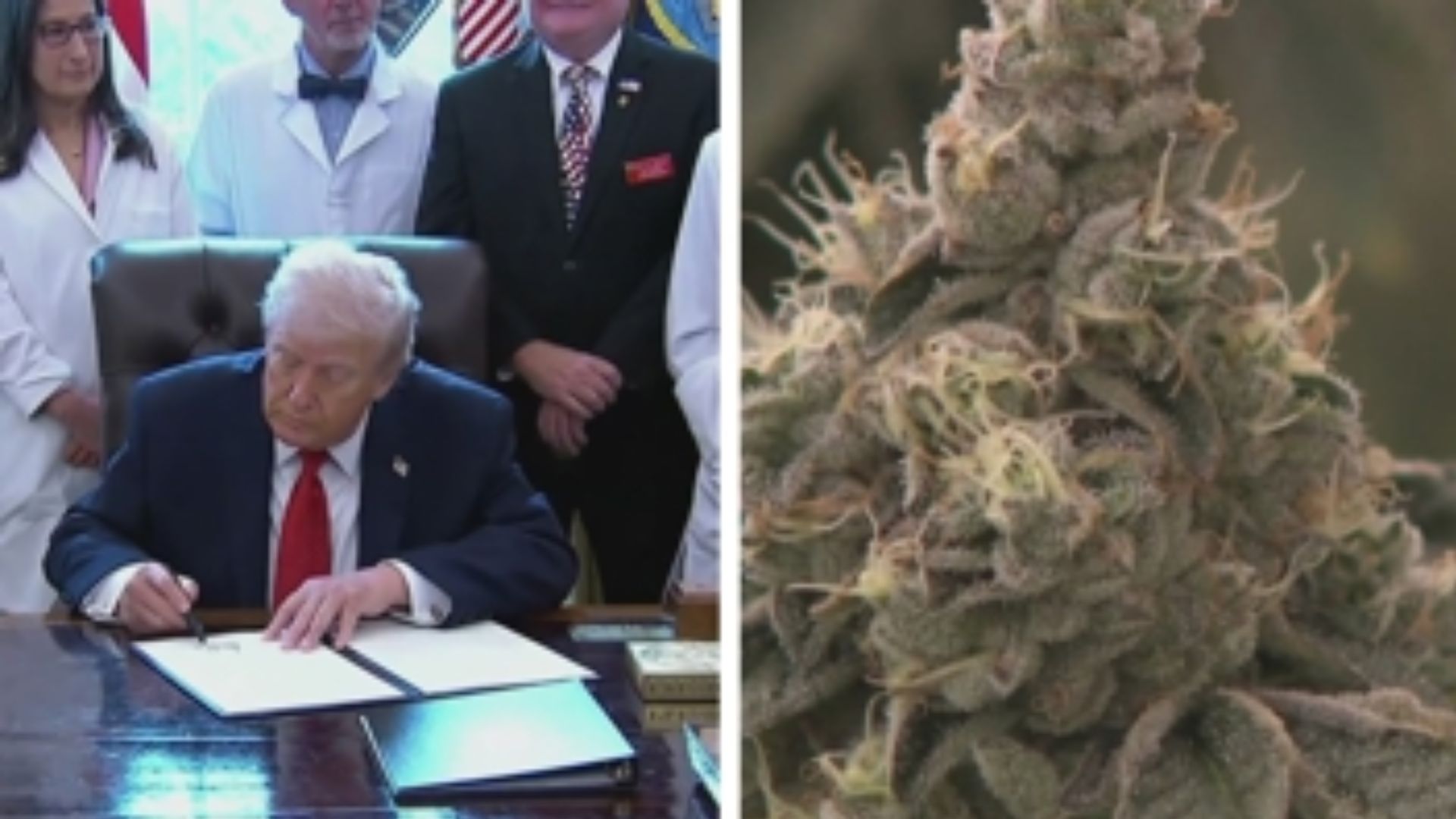
Little Rock, Arkansas – President Donald Trump’s recent executive order directing federal agencies to move marijuana from a schedule one to a schedule three drug has sparked nationwide attention, including here in Arkansas. While the news has drawn headlines, state leaders are emphasizing that the order does not legalize marijuana and does not override existing Arkansas laws.
“I don’t think anything in Arkansas has changed other than researchers who study the effects of medicine now will have more opportunity to study the effects of medical marijuana,” said Senator Ronald Caldwell (R-Wynne), co-chair of the Medical Marijuana Oversight Subcommittee. His comments highlight that the executive order is primarily aimed at expanding research opportunities rather than altering access for patients.
Arkansas voters legalized medical marijuana through a constitutional amendment in 2016, and the state has developed a regulated framework for patient access. According to the Arkansas Department of Health, more than 113,000 residents currently hold medical marijuana cards, demonstrating that the program is already widely used across the state.
Despite federal movement on reclassification, a spokesperson for Arkansas Attorney General Tim Griffin stressed that state law remains unchanged. “Any federal reclassification would not alter or impact Arkansas’s constitutional provisions or marijuana laws,” the spokesperson said. This ensures that patients and dispensaries in the state are unaffected by the federal order in terms of legality or access.
Senator Caldwell explained that the real impact of the executive order will be in research and development. “If you listen to the statements that President Trump made, it was to try to develop new treatments for these chronically ill patients, and especially those with cancer who may receive some relief. And there’s other items out there too that can be treated, but I know that it is strictly a medical application, but the change in his executive order was strictly going to affect research,” he said.
He emphasized that dispensaries and patient access will see little to no immediate change. “The researchers will be able to obtain samples and study them where in times past they have not,” Caldwell added, noting that this could accelerate studies on how medical marijuana can help with a variety of conditions, including chronic illnesses and cancer-related symptoms.
The Arkansas Department of Finance and Administration, which serves as the liaison for the state’s Medical Marijuana Commission, said it is reviewing the executive order to determine any potential impact. “We are reviewing the details of the order to determine any impact to the state, including the medical marijuana industry. We don’t have any specifics at this time as it will require additional review,” the agency stated. If changes do occur, they would likely affect laboratories and research programs rather than patients or dispensaries.
Experts say that federal reclassification from schedule one to schedule three could make it easier for universities, medical institutions, and private researchers to access marijuana for scientific studies. Previously, stringent regulations and limited availability made research difficult, slowing potential breakthroughs in medical applications. For Arkansas, this could mean an expansion of locally conducted studies and collaborations with national research institutions.
For patients in the state, however, day-to-day life is unlikely to be affected. Marijuana remains legal in Arkansas only for medical purposes under voter-approved rules, and dispensaries will continue to operate under state regulations.
While the executive order is a federal initiative, Arkansas officials are keeping a close watch on potential implications. For now, the focus remains on using the opportunity to enhance research capabilities, while ensuring that state law and patient protections remain intact.
The federal move could mark the beginning of broader discussions on marijuana policy in the U.S., but in Arkansas, the immediate takeaway is clear: patients and dispensaries won’t see change, but researchers may finally gain new tools to study the therapeutic benefits of medical marijuana.


